Showing posts with label foodsafe. Show all posts

Saturday, 4 December 2021

Food safe HDPE plastic better than glass

In it's simplest terms, the relevant principles difference between the different types of plastic is the way in which their cellular structure, or molecules attachment with each other, and the path tightly they're formed.

1) Low Density Polyethylene( LDPE ), commonest type of plastic sheeting, highly flexible, most often from 0.5 mil thick-skulled to about 40 mil in flexible sheeting sorts. Good conformability to surfaces. Because the cell construction is just not as strong or dense as another kinds of plastic sheeting, "its not" normally as strong or puncture resistant as different forms or blends, nonetheless has thousands of widespread applications. Extensively be useful for all the parts from construct and agricultural sheeting( typically called Visqueen ), Engineered Plastic Sheeting of several sorts for things like Vapor Retarders( additionally called Vapor Obstacles by many ), Floor Safety movies, Pond and Canal Liners, Covers, Tarps, Abatement Plastic, Containment, package, and the listing goes on.

2) Linear Low Density Polyethylene( LLDPE ), merged sort of LDPE the place the cinema has behavior more flexibility, tensile strength, and more conformability. LLDPE is "softer" and extra pliable, so is a wonderful choice for such things as pond liners, or blended into other movies to provide them extra strength and flexibility. This is perfect for an application like a self-adhesive carpet safety cinema, where the movie must have an astonishing length of strength in a really thin cinema to soak up impacts, nonetheless not tear or puncture. On this form of poly, the molecules all line up and strongly hold together as the film is extended to present the structure much more power and elongation than LDPE. Most common in thickness starting from 0.5 mil to 40 mil in flexible plastic sheeting.

3) Medium Density Polyethylene( MDPE ), the least generally used type of polyethylene for versatile plastic sheeting. Has extra vigour than LDPE, moderately extra chemical resist, tighter cell formation, extra puncture and tear resist. Often blended with LDPE and or LLDPE to give the attributes one is looking for in a particular kind of film. For instance, many pond liners have MDPE to contribute some strength and toughness, with out including an excessive sum of stiffness.

4) High Density Polyethylene( HDPE, aka HD ), extensively be useful for many applications. HDPE is the strongest, toughest, most chemical resistant, and least versatile of these four varieties of polyethylene. It additionally has the most UV resistance of the cluster without additive packages to widen this attribute. HDPE has a very tight cell construction, stimulating it difficult for other molecules to go by means of its structure on a microscopic tier. HDPE is essentially the most easily subject seamed of those merchandise, and is generally used on an industrial degree in thicknesses from about 12 mil to a hundred mil Thick plastic sheets. Most golf course ponds are lined with HDPE, most industrial ponds and canal liners, secondary containment liners, root obstacles, many runs the place chemical opposition is requirement. This is additionally are used in   1000' s or maybe hundreds of thousands of purposes in thinner smorgasbords, particularly in blends with the opposite forms of polyethylene, because the HDPE supplies a lot vigour and toughness with its very tight bails with various molecules.

The density of polyethylene is measured in a tower of liquid, and they're all categorized relying on scopes of density. LDPE( and LLDPE) are generally in all regions of the range of 0.919 -0.924 g/ cm3. MDPE are generally throughout the range of 0.926 -0.940 g/ cm3. HDPE are typically inside the differ of 0.941 -0.965 g/ cm3. These numerals can differ scarcely depending in your informant, and are usually not set in stone, merely general guidelines.

HDPE plastic

Keep food safe with HDPE instead of Glass

In its basic terms, the relevant principles difference between the different types of plastic is the way in which their cellular structure, or molecules bond with each other, and the direction tightly they're formed.

1) Low Density Polyethylene( LDPE ), commonest type of plastic sheeting, very flexible, most often from 0.5 mil thick-skulled to about 40 mil in flexible sheeting forms. Good conformability to surfaces. Because the cell construction is just not as strong or dense as another sorts of plastic sheeting, "its not" typically stronger and stronger or puncture resistant as different forms or blends, nonetheless has thousands of widespread employs. Extensively used for all the articles from build and agricultural sheeting( often called Visqueen ), Engineered Plastic Sheeting of several kinds for things like Vapor Retarders( additionally called Vapor Obstacles by many ), Floor Safety movies, Pond and Canal Liners, Covers, Tarps, Abatement Plastic, Containment, packaging, and the list goes on.

2) Linear Low Density Polyethylene( LLDPE ), blended form of LDPE the place the film has space greater flexibility, tensile strength, and more conformability. LLDPE is "softer" and extra pliant, so is a wonderful alternative for such things as pond liners, or blended into other movies to provide them extra strength and flexible. This is perfect for the purposes of an application like a self-adhesive carpet security film, where the movie must have an astounding sum of strength in a really thin cinema to soak up impacts, however not tear or puncture. On this form of poly, the molecules all line up and strongly hold together as the cinema is stretched to present such structures much more influence and elongation than LDPE. Most common in thicknesses starting from 0.5 mil to 40 mil in flexible plastic sheeting.

3) Medium Density Polyethylene( MDPE ), the least generally used type of polyethylene for versatile plastic sheeting. Has extra vigor than LDPE, moderately extra substance resist, tighter cell formation, extra puncture and tear resist. Often blended with LDPE and or LLDPE to give the attributes one is looking for in a particular various kinds of cinema. For instance, many pond liners have MDPE to contribute some strength and toughness, with out including an excessive sum of stiffness.

4) High Density Polyethylene( HDPE, aka HD ), extensively used for many applications. HDPE is the strongest, toughest, most chemical resistant, and least versatile of these four ranges of polyethylene. It additionally has the most UV resistance of the cluster without additive packets to widen this attribute. HDPE has a very tight cell structure, moving it difficult for other molecules to go by means of its structure on a microscopic grade. HDPE is essentially the most easily self-discipline seamed of those merchandise, and is generally used on an industrial degree in thin film from about 12 mil to a hundred mil Thick plastic sheets. Most golf course ponds are lined with HDPE, most industrial ponds and canal liners, secondary containment liners, root hurdles, many functions the place chemical resist is needed. This is additionally utilized in   1000' s or maybe hundreds of operates in thinner assortments, particularly in blends with the opposite forms of polyethylene, because the HDPE furnishes a lot vigour and toughness with its very tight attachments with various molecules.

The density of polyethylene is measured in a editorial of ocean, and they're all categorized relying on assortments of density. LDPE( and LLDPE) are generally in all regions of the assortment of 0.919 -0.924 g/ cm3. MDPE are generally throughout the scope of 0.926 -0.940 g/ cm3. HDPE are typically inside the differ of 0.941 -0.965 g/ cm3. These numbers can vary scarcely depending in your source, and are usually not set in stone, just general guidelines.

HDPE plastic

Friday, 13 November 2020

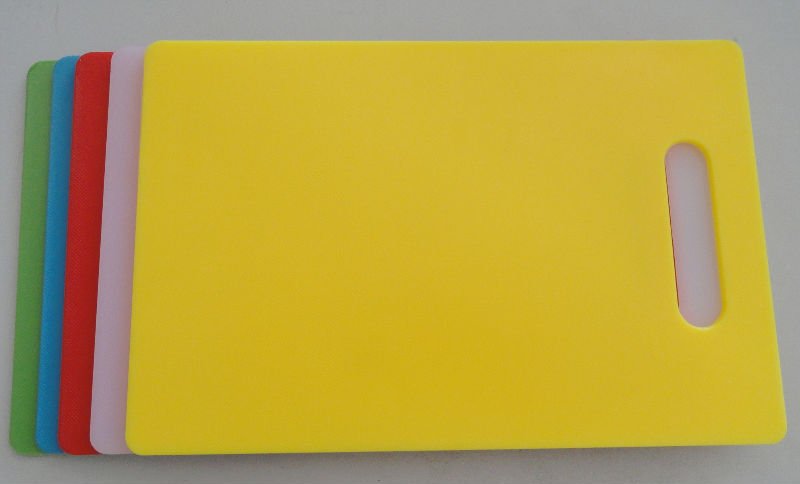
High Density Polyethylene as a cutting board

During your next time you're going to be slicing greens upon your cutting board, take the opportunity and check out it, the material most likely to be used as a High Density Polyethylene Cutting Board Material - Sheets cutting board is Polyethylene. Given that it can be FDA and NSF approved together with stain, moisture and odor resistant, Polyethylene is the best choice for slicing boards.

Alternative cutting boards made out of wood are prone to bacteria and strong odors given that they lack the desirableproperties that Polyethylene sheets offer, including its non permeable surface, chemical resistance and approval for food contact. High Density Polyethylene most certainly a durable and light-weight material that comes in a good many forms and is well suited for a wide array of applications. There are many kinds of Polyethylene commercially available. The commonest are HDPE (High Density Polyethylene), LD Polyethylene, and UHMW (Ultra High Molecular Weight Polyethylene). The key difference has to do with the molecular weight and branching;  this occurs when a monomer or atom is replaced by a longer chain of polymers (a very long repeating chain of atoms).  

{plastic-cutting-board-500x500.jpg|chopping-board-econocut-partwell-(600x315-ffffff).jpg?v=433ad227|kucb012.jpg|1283654729765_hz-myalibaba-temp14_3796.JPG|royal-industries-roy-cb-182434-24-x-18-heavy-duty-plastic-cutting-board_4631539.jpg


High Density is frequently used for milky white gallon milk jugs and common food containers. Low Density is commonly used for bottles or perhaps plastic grocery bags. UHMW, which has higher molecular weight (2-6 million) allowing for an even transfer over the length of material which makes it stronger, making it able to be used for bearing job applications because of great wear resistance. Regularly employed in the food processing and dairy industry, Ultra High Molecular Weight makes a great replacement for various industrial materials and a wonderful technique to many wear issues.   Most of these polymers are derived from the same polyolefin plastic materials family, but all have certain properties that make them a little different. HDPE provides great chemical resistance, has very high impact strength and great energy absorption. Low Density Polyethylene has many of the same properties as High Density however it is not as dense at 9.15, whereas HDPE which is 9.34, and it is a softer material ( the soft coffee can lids). In addition, it has a lower tensile strength plus better, simpler heat forming.
UHMW is really a strong material with great durability and low co-efficient of friction which makes it an ideal for sliding applications. Dupont makes the plastic material with a lower co-efficient of friction is Dupont Teflon - PTFE; which has a higher temperature and chemical resistance. The UHMW Polyethylene has a lot of material offerings and properties,  and most of these materials include extraordinary toughness which could be properly suited for several applications. From the food industry to automotive, your kitchen and even the warehouse, whatever your Polyethylene needs are - High Density, Low Density or UHMW, Polyethylene is a brilliant decision. Call us for more information on these and other plastic raw materials.

local performance plastic sheet